

Aluminum CNC Machining – Complete Beginner’s Guide

Aluminum CNC machining stands among the most widely adopted modern manufacturing methods, thanks to its capability to produce high-precision, lightweight, and complex mechanical components at fast speeds and reasonable production costs.
Core Overview of Aluminum CNC Machining
Few industrial metals deliver the all-round flexibility and practicality of aluminum. Boasting excellent cutting performance and moderate material costs, aluminum is perfectly suited for all types of CNC processing.
In actual production, aluminum can be machined 3–4 times faster than common hard metals such as steel and titanium. Its outstanding strength-to-weight ratio and good ductility make it the top choice for lightweight structural parts across transportation industries, including automobiles, railway vehicles, aerospace equipment, and marine vessels.
With global manufacturing focusing on energy saving and lightweight design, aluminum has gradually replaced heavy traditional metals for structural frames and functional components. Its natural anti-corrosion property eliminates the need for costly, bulky anti-rust coatings required by iron and steel parts.
Besides industrial use, aluminum is non-toxic, easy to process, and fully recyclable. These traits make it popular for daily consumer goods like food packaging, storage containers, and household hardware. Its smooth metallic surface texture also makes it ideal for consumer electronics, including smartphones, laptops, display devices, and smart wearable products. It is also extensively applied in architectural decoration and building structural components.
Overall, aluminum balances light weight, structural durability, cost control, and environmental recyclability — outperforming steel in weight, exceeding plastic in stability and load-bearing capacity, and featuring stable supply and strong custom processing potential.
This guide covers all core basics:
Where aluminum raw materials come from and their core traits
How CNC machining works in practical production
Common aluminum alloy types for custom CNC parts
Performance & cost comparison between aluminum and steel
Common processing techniques for aluminum CNC production
Basic Origin & Features of Aluminum Raw Material
Aluminum ranks as the most abundant metallic element in the earth’s crust. The global metal industry produces over 40 million tons of aluminum every year, covering countless industrial and commercial application scenarios.
Like most metals, aluminum exists in natural rock ore form. Bauxite is the core raw ore for aluminum smelting, containing 30%~60% alumina, with the rest composed of silica, iron oxide, titanium compounds, and other impurities.
Aluminum production is completed in two core stages:
- Alumina Extraction from Bauxite
The Bayer process is the mainstream industrial method for refining bauxite into alumina. Developed in the late 19th century, this mature process includes crushing bauxite into fine powder, mixing with water, and high-temperature reaction with alkaline solution.
Alumina is dissolved in the liquid, separated from solid impurities via filtration, then crystallized, dried, and purified to form high-purity industrial alumina powder. - Electrolytic Smelting for Pure Aluminum
Alumina is dissolved in a special molten solvent, and pure aluminum is separated through high-current electrolysis. After electrolysis, raw aluminum liquid is collected, mixed with recycled aluminum materials for secondary melting, and refined to improve purity.
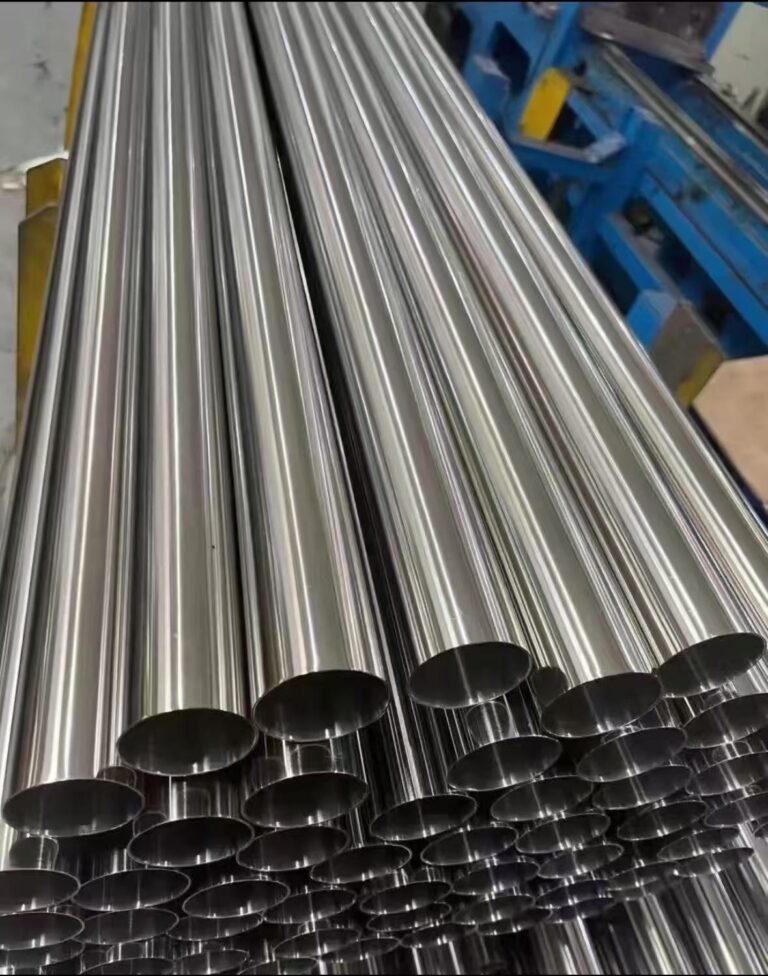
The molten aluminum is then cast or extruded into standard raw materials: aluminum sheets, billets, bars, tubes, plates, and profiles. These standardized blanks are cut to size and supplied to processing factories for customized CNC machining into finished parts.
Core Concept & Working Principle of CNC Machining
CNC machining combines traditional mechanical cutting technology with computer numerical control systems. Through programmed digital instructions, CNC equipment accurately cuts, carves, and shapes raw material blanks to create complex parts that manual processing cannot complete efficiently.
Computer automatic control ensures ultra-high dimensional accuracy, stable product consistency, and higher production efficiency. It effectively reduces material waste, lowers manual operation errors, and supports personalized custom design and mass batch production at the same time.
Early numerical control equipment emerged in the 1940s with motor-driven transformation. After the popularization of industrial computers in the 1960s, modern intelligent CNC machine tools were fully promoted.
Common industrial CNC equipment includes milling machines, lathes, drilling and tapping machines, as well as plasma cutting, laser cutting, and waterjet cutting equipment. All belong to subtractive manufacturing: removing excess material from solid blanks to obtain target part shapes.
Main Aluminum Alloy Grades for CNC Processing
Pure aluminum features soft texture, natural corrosion resistance, non-magnetism, and excellent thermal & electrical conductivity. However, low structural strength limits its use in mechanical parts.
By adding copper, magnesium, manganese, silicon, zinc, lithium, and other elements, aluminum is made into high-performance alloys with boosted hardness, tensile strength, and comprehensive mechanical properties. The aluminum alloys commonly used for CNC customization are divided into three categories:
Cast Aluminum Alloys
Cast aluminum is formed by pouring molten alloy into precision molds for cooling and shaping. It features low production cost, rich moldable shapes, good high-temperature stability, and lightweight advantages.
The automotive sector is the largest user of cast aluminum, widely used in engine shells, transmission parts, chassis accessories, and structural supports. It is also common in kitchen utensils, mechanical housings, and handheld tools.
Due to low melting point, cast aluminum is easy for mass casting, but its tensile strength is lower than wrought aluminum. Cutting resistance is higher, leading to faster tool wear during CNC processing.
Aluminum-Lithium Alloys
Lithium is the lightest metal element, making Al-Li alloys far lighter than ordinary aluminum alloys. It is a key lightweight material for high-end fields such as aerospace, aircraft fuselages, wing structures, and aerospace power parts, also used in high-performance racing equipment.
The main drawbacks are poor machinability and low fracture resistance. Limited production scale also leads to higher material and processing costs, suitable only for high-end customized scenarios.
Wrought Aluminum Alloys
Wrought aluminum is processed by rolling, forging, extrusion, and stamping under solid-state conditions. With compact internal structure and superior mechanical properties, it is the most widely used material for aluminum CNC machining.
Wrought aluminum is easier to cut, delivers smoother surface finishes, causes less tool loss, and balances strength and processing efficiency. It is the preferred material for precision machinery, automation parts, medical equipment, and electronic structural components.
Aluminum vs Steel: Key Differences in CNC Machining
Aluminum and steel are the two most widely used metal materials in CNC custom processing. The selection depends on five core factors: cost, corrosion resistance, weight, mechanical strength, and cutting performance.
- Comprehensive Cost
Ordinary carbon steel and mild steel have lower unit material prices, while stainless steel costs more than most aluminum alloys. Raw material prices fluctuate with market supply, energy costs, and logistics expenses.
When calculating overall costs, service life and maintenance costs must be considered. Low-cost materials in the early stage may bring higher replacement and maintenance costs in long-term use. - Corrosion & Rust Resistance
Aluminum and stainless steel both have strong natural anti-corrosion ability. Carbon steel and alloy steel require surface spraying, electroplating, or anti-rust coating treatment for outdoor or humid working environments, increasing processing steps and later maintenance costs. - Weight Density
Aluminum’s density is only 1/3 of steel, providing obvious lightweight advantages. With the booming demand for energy saving and lightweight manufacturing, more structural steel parts are being replaced by aluminum alloy components. - Structural Strength & Stability
Steel has higher hardness and compressive strength, not easy to deform, bend or warp under heavy load, high temperature and impact. Aluminum parts are more prone to surface scratches and indentation, suitable for light and medium load working conditions. - CNC Machinability
Aluminum has low density and soft texture, with cutting efficiency 3–4 times higher than steel. It dissipates heat quickly during high-speed processing, reducing equipment cycle time and coolant consumption.
Aluminum requires lower cutting force, slowing tool wear and extending cutter service life. It can be produced on medium and small CNC equipment, with lower requirements for machine tool rigidity.
Mainstream CNC Machining Methods for Aluminum Parts
CNC Milling
CNC milling is the most common and versatile processing method for aluminum parts. High-speed rotating cutters remove excess material from fixed blanks to complete plane cutting, groove processing, hole digging, and 3D contour shaping.
Modern machining centers support automatic tool changing and multi-axis linkage. 3-axis, 4-axis and 5-axis milling equipment can meet from simple 2D parts to complex curved surface customization, covering most industrial aluminum part demands.
CNC Turning
CNC lathes fix and rotate aluminum workpieces, with fixed turning tools for precision cutting. It is mainly used for shaft parts, sleeve parts, threaded parts, and circular structural components.
It supports drilling, grooving, tapping, threading, and taper processing, featuring high dimensional repeatability and suitable for mass production of standard rotary parts.
CNC Plasma Cutting
Plasma cutting uses high-temperature plasma arcs to quickly melt and cut aluminum plates. It is suitable for rapid blanking of medium and thick aluminum plates, with fast cutting speed and low equipment cost, widely used for structural sheet rough processing.
CNC Laser Cutting
High-power laser beams melt or vaporize aluminum materials for precise cutting. Laser cutting delivers higher finish and dimensional accuracy than plasma cutting, especially suitable for thin aluminum plate precision cutting and complex pattern blanking.
CNC Waterjet Cutting
Ultra-high pressure water jets mixed with abrasive materials cut aluminum without high-temperature heat effect. It will not cause material deformation, surface oxidation or structural changes, suitable for high-precision parts that require no thermal processing.
Nested layout can be adopted during cutting to improve material utilization and reduce raw material waste.