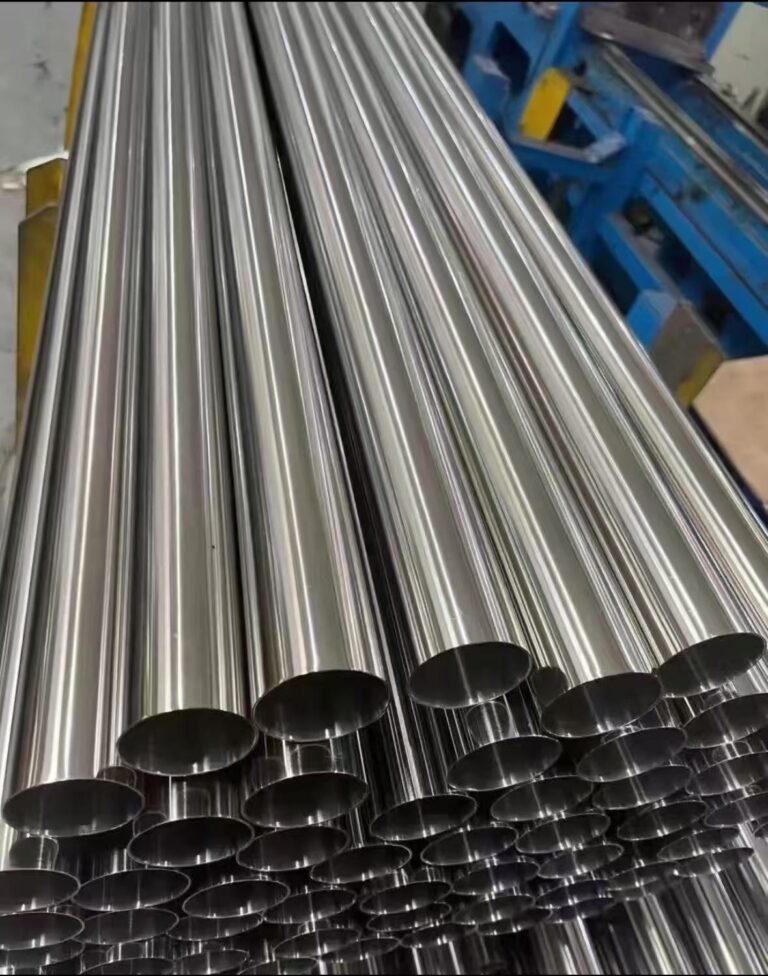


A Complete Guide to CNC Machining Subprocesses & Tolerances: Choose the Right Option to Cut Costs & Ensure Quality

Introduction: Why Subprocess & Tolerance Matter for Your CNC Parts
When you order custom CNC machined components for automotive, medical, robotics, electronics, or industrial equipment, two factors decide everything: final quality, production lead time, and overall manufacturing cost.
Many sourcing engineers and product buyers face common headaches:
- The part drawing is clear, but the factory uses the wrong machining method → assembly fails
- All dimensions set to ultra-tight tolerance → high cost and delayed delivery
- Unreasonable process selection → poor surface finish, vibration marks, or uneven roundness
- No clear tolerance classification → extra inspection fees and rejected batches
To solve these problems easily, we share a complete, practical CNC subprocess selection guide and three standard tolerance levels. You can pick the right process and precision freely, lower your budget, and get perfect-fit parts on time.
6 Common CNC Machining Subprocesses: Which One Fits Your Part?
Each CNC subprocess is designed for specific part shapes, structures, sizes, and production volumes. Choosing the correct method ensures stable performance, clean edges, precise fits, and reasonable pricing.
1. CNC Turning — Ideal for Round, Symmetrical Shaft and Sleeve Components
Working principle: The metal bar spins rapidly, and a fixed turning tool cuts the outer and inner surfaces. Classic lathe machining upgraded with full digital control.
Perfect applications:
- Shafts, pins, bolts, nuts, bushings, rollers, connector terminals
- Simple cylindrical parts, thread outer diameter, inner hole matching
- Standard mechanical transmission parts for automation equipment
Choose turning if: your part is fully round and symmetrical, no complex side milling needed.
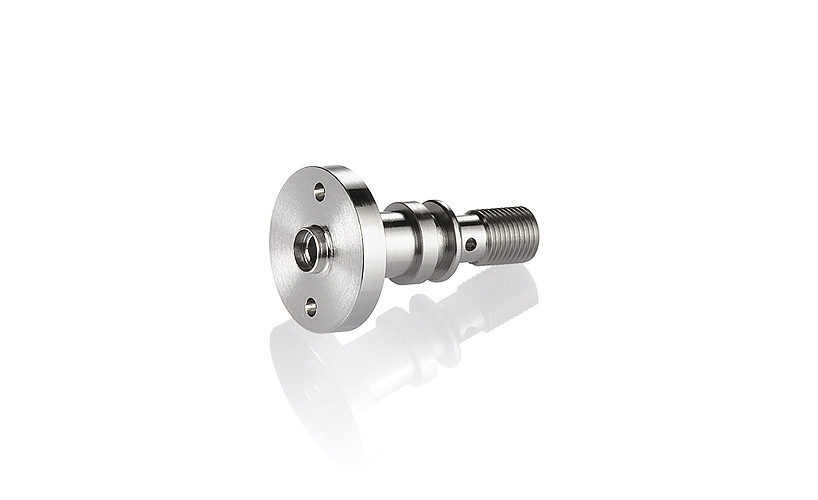
2. CNC Milling — Best for Block, Housing, and Complex Multi-Surface Parts
Working principle: The cutting tool rotates at high speed, and the workpiece stays fixed. Supports 3-axis, 4-axis, and full 5-axis simultaneous machining.
Perfect applications:
- Block-shaped, irregular, and hollow structural components
- Parts with slots, holes, pockets, curved contours, multi-angle features
- Aluminum alloy brackets, equipment housings, robot connection blocks, fixture plates
Choose milling if: your part is not mainly round, and you need multi-side precision features.
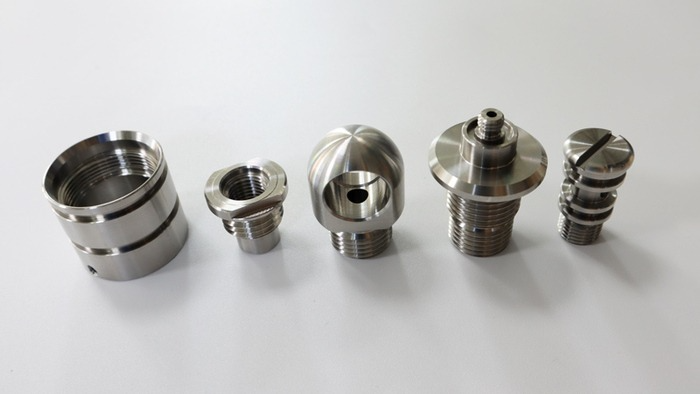
3. CNC Mill-Turn Combo — For Complex Parts With Both Round and Special Features
Working principle: One advanced machine completes both turning and milling in a single clamping process. No secondary re-clamping error.
Perfect applications:
- Shafts with keyways, flat surfaces, cross holes, off-axis holes, gear teeth
- Hydraulic valve cores, engine small parts, robot special connecting shafts
- High concentricity requirements and low runout tolerance needed
Choose mill-turn combo if: one part needs both circular precision and irregular side structures.
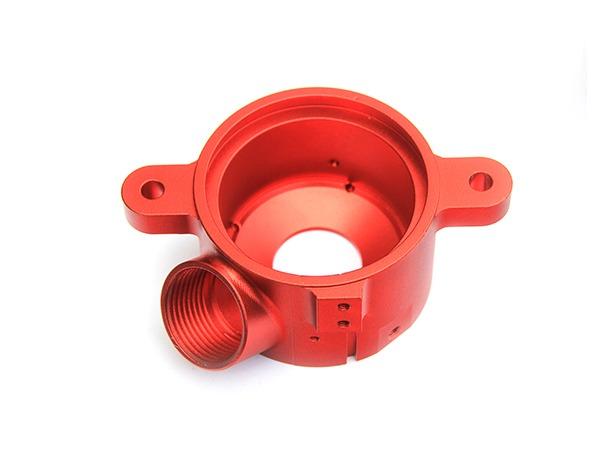
4. Swiss-Type Turning — High Precision for Long, Thin, Small Diameter Mass Parts
Working principle: The material bar passes through a guide bushing, cutting near the support point. Zero vibration, almost no bending deformation.
Perfect applications:
- Long slender parts with large length-to-diameter ratios
- Small precision pins, medical catheter fittings, watch internal parts, electronic terminals
- High-volume mass production with micron-level repeat accuracy
Choose Swiss turning if: your part is tiny, long, thin, and requires ultra-stable batch quality.
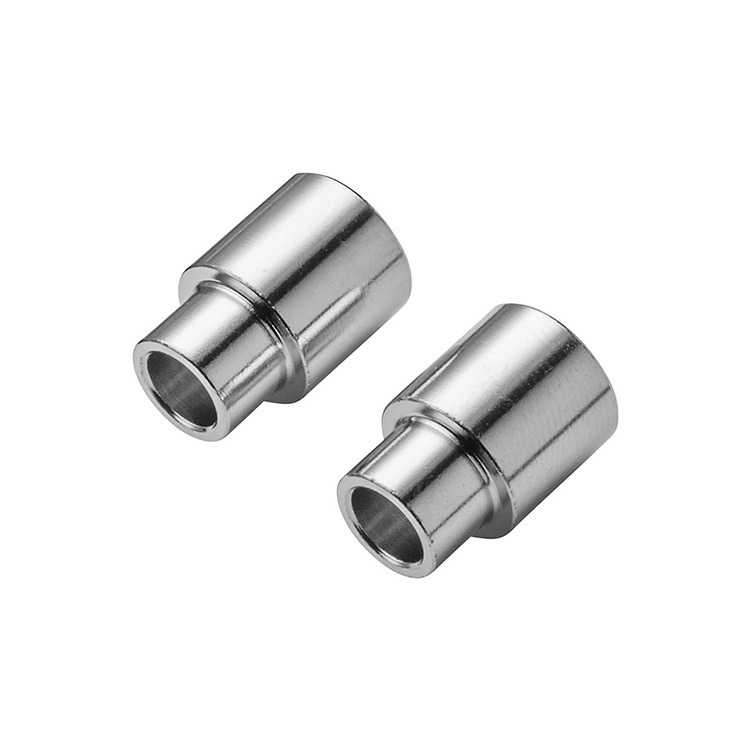
5. Micro Machining — Ultra-Fine Machining for Medical & Aerospace Tiny Components
Working principle: High-frequency spindle + ultra-small micro tools, dedicated dust-free precision workshop, strict temperature control.
Perfect applications:
- Medical surgical instrument parts, micro gears, tiny sensor shells
- Aerospace miniature connectors, fuel injector micro components
- Features below 1 mm, tolerance down to ±0.001 mm
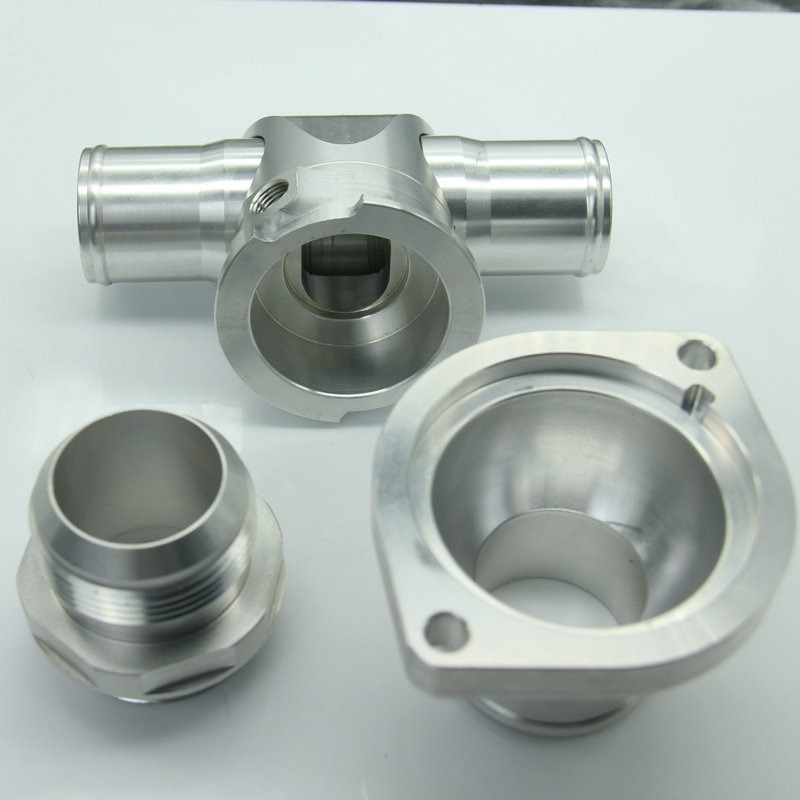
6. CNC Routing — Cost-Effective Cutting for Large Flat Sheet Materials
Working principle: Gantry large-format cutting keeps the original surface of aluminum plates, plastic sheets, and composite materials intact.
Perfect applications:
- Large equipment aluminum tooling plates, machine cover panels
- Big flat non-structural parts that do not need full 3D precision milling
Three CNC Tolerance Levels: Match Precision to Your Budget
Tolerance directly decides your cost. Tighter tolerance = higher inspection cost, slower speed, more scrap rate. We use international standard ISO 2768 and divide all orders into three clear levels for easy selection.
1. Standard Tolerance — Default, Best for General Assembly Parts
Tolerance range:
- Metal materials: ±0.005 inch / ±0.01 mm
- Plastic & composite: ±0.010 inch / ±0.02 mm
Suitable for: ordinary structural frames, non-matching appearance parts, internal fixed supports. No extra cost, fastest delivery time.
2. Relaxed Tolerance — Save 15%–25% Cost for Prototypes & Non-Critical Parts
Tolerance range: Double the standard tolerance range.
Suitable for:
- Early-stage R&D prototypes, test samples
- Pure appearance decorative parts, no assembly interference requirements
- Internal non-moving auxiliary components
Advantage: greatly reduces machining time and inspection workload, directly lowers your purchasing budget.
3. Tight Precision Tolerance — For Critical Moving & Sealing Core Parts
Tolerance range: Ultra-precise down to ±0.001 inch / ±0.002 mm.
Suitable for:
- Bearing fitting positions, sliding moving structures, airtight sealing surfaces
- Medical equipment, aerospace core components, automotive safety parts
Tip: Only mark tight tolerance on key dimensions, do not apply full-part ultra-tight tolerance to save unnecessary cost.
3 Quick Rules Engineers Can Follow Every Time
- Shape first, process second: Round parts → turning/Swiss; block parts → milling; complex mixed structures → mill-turn combo.
- Tier tolerance reasonably: Core assembly positions = tight; outside appearance = standard; prototypes = relaxed.
- Volume decides method: Small batch → normal milling/turning; large batch → Swiss automatic production.
Get Free Process & Tolerance Evaluation From Our Engineer Team
If you are not sure which subprocess or tolerance level to select for your new project, send us your 2D drawings and 3D CAD files (STEP, IGS, STL).
We provide:
- Free DFM design for manufacturing check
- Free optimal subprocess recommendation
- Free cost-saving tolerance optimization plan
- Formal quotation within 24 hours
We support one-stop custom CNC machining, from prototyping to mass production, for global industrial buyers.