
When to Choose 3D Printing Over Injection Molding for Custom Plastics

In custom plastic part manufacturing, plastic 3D printing and injection molding are the two most mainstream production processes. Most product developers, mechanical engineers, and procurement teams often face the same question: Should I choose 3D printing for prototyping, or directly invest in injection mold mass production? Neither process is absolutely better than the other; the core is application scenario matching. Reasonably combining these two methods can perfectly cover the whole product life cycle—rapid prototyping, low-volume trial production, and mass manufacturing—and help companies balance R&D speed, production cost, surface quality, and delivery lead time.
Core Principle & Positioning Difference Between 3D Printing and Injection Molding
To make the right choice, you first need to understand the fundamental differences between the two processes, their core positioning, and key features. This lays the foundation for subsequent selection based on your specific needs.
Injection Molding: Mold-Driven Mass Manufacturing
Injection molding is a traditional and mature mold-driven mass manufacturing process. Its working principle is straightforward: first, customize precision plastic molds according to the product design, then inject molten engineering plastic into the mold cavity, and finally obtain finished parts through cooling, solidification, and demolding cycles. This process is designed for large-scale, stable production.
Key features of injection molding:
- Reliant on upfront mold investment; once the mold is finalized, it can be reused for long-term, continuous production.
- Excellent part dimensional consistency, surface finish, and material stability—critical for standardized products.
- Ideal for products with standardized structures and finalized designs that require mass production.
- Compatible with a wide range of engineering plastics, elastomers, and other raw materials to meet diverse functional requirements.
Plastic 3D Printing: Mold-Free Additive Manufacturing
Plastic 3D printing, also known as additive manufacturing, is a digital, mold-free production technology. Unlike injection molding, it does not require tooling; instead, it builds parts layer by layer directly from 3D CAD files. This process is focused on flexibility, speed, and customization.
Key features of plastic 3D printing:
- No mold cost and no mold development lead time; production can start directly with design files, reducing upfront investment.
- Extremely high design freedom—complex geometries that are difficult or impossible to achieve with injection molding can be produced easily.
- Ultra-fast delivery: regular parts can be delivered in 1–3 working days, making it perfect for rapid prototyping and urgent orders.
- Multiple mainstream technologies available (SLA resin curing, SLS/MJF powder sintering, FDM filament printing) to meet different appearance and functional needs.
5 Core Selection Criteria for 3D Printing vs Injection Molding
Choosing between 3D printing and injection molding depends on your specific project needs. Below are the five most critical selection criteria, optimized for SEO and practical application, to help you make an informed decision.
1.Functional Requirements & Surface Finish
The function of the plastic part and its required surface finish are the first factors to consider, as they directly determine which process can meet your standards.
Injection Molding Advantages for Function & Finish: The mold can be polished, textured, matte blasted, or mirror finished to achieve diverse surface effects. It supports a full range of engineering plastics with outstanding performance in wear resistance, high temperature resistance, chemical resistance, and sealing. Most plastic components for home appliances, automotive parts, and medical devices adopt injection molding due to these advantages.
3D Printing Features for Function & Finish: Surface texture depends on the printing technology: resin printing delivers smooth surfaces, powder printing shows a fine grain texture, and FDM has visible layer lines. 3D printing is more suitable for functional prototypes, structural testing parts, and non-appearance structural components. While surface quality can be improved by post-processing (polishing, spraying, sanding), mass production consistency cannot match injection molding.
2.Structural Design & Geometric Complexity
Product structure directly affects process feasibility and manufacturing cost. The two processes have very different limitations when it comes to complex geometries.
Injection Molding Limitations: It follows strict Design for Manufacturability (DFM) principles. Designers must consider draft angles, undercut structures, uniform wall thickness, gate positions, and ejection systems. Complex inner cavities, interlaced structures, or hard-to-demold features increase design difficulty and mold modification costs.
3D Printing Advantages: Almost no structural restrictions. Hollow lattices, deep inner cavities, undercuts, and integrated special-shaped parts can be produced easily, with no extra cost for complex designs. This makes 3D printing highly friendly for innovative product R&D and custom parts.
3.Order Quantity & Cost Break-Even Point
Production volume is a key factor in determining cost efficiency, as there is an obvious cost break-even point between 3D printing and injection molding.
Injection Molding Cost Logic: High initial mold cost, but the unit cost drops sharply as output increases. The more parts you produce, the lower the per-unit cost, making it cost-effective for large batches.
3D Printing Cost Logic: No mold investment, so the unit price remains stable. It has a clear cost advantage for small batches, but there is no obvious discount when the quantity increases.
Industry standard break-even reference (for reference only):
- Large plastic parts: Around 70 units is the switching point where injection molding becomes more cost-effective.
- Medium structural parts: 250–500 units is the typical break-even point.
- Small precision parts: The break-even point can be as high as 2000 units.
4.Delivery Time & R&D Schedule
For new product development, sample confirmation, and urgent order replenishment, lead time is critical to meeting project deadlines.
Injection Molding Lead Time: The overall process is long, including DFM review, mold making, trial sample approval, and mass production. Total lead time usually takes 3–8 weeks; complex materials and precision molds may require even longer.
3D Printing Lead Time: The quotation and production process is simple. Regular parts can be delivered in 1–3 working days, with rush orders available within 1 day. This makes 3D printing perfect for urgent sampling, fast iteration, and short-term transitional production.
5. Version Iteration & Long-Term Production Plan
Whether your product requires frequent design changes and has a long-term mass production plan also affects the process decision.
Injection Molding for Long-Term Production: Once the mold is completed, structural modifications require costly mold adjustments or remaking. This makes injection molding suitable for products with frozen designs and stable long-term mass production needs.
3D Printing for Iteration: No mold limitation—just modify the CAD file to start new production. It offers zero iteration cost and zero mold waiting time, making it ideal for startup products, R&D iteration, and multi-spec small-batch customization.
Applicable Scenarios: When to Choose 3D Printing vs Injection Molding
To simplify your decision-making, here is a clear division of applicable scenarios for each process.
Choose Plastic 3D Printing If:
You need bridge production during the mold development waiting period.
You need new product prototype verification or functional structural testing.
Your product has complex shapes, hollow lattices, or hard-to-demold undercut structures.
You require low-volume customization, multi-spec small orders, or prototype accessories.
Your product needs frequent design revisions or short-term transitional production.
Choose Injection Molding If:
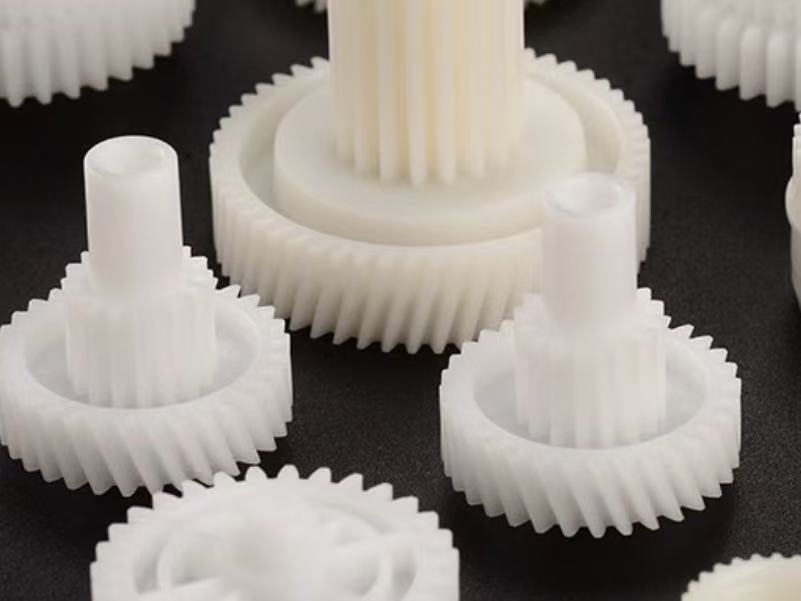
You need long-term supporting plastic parts for home appliances, automotive, medical, or industrial equipment.
You need medium or large batch standardized plastic part mass production.
You have high requirements for surface texture, matte effect, or mirror appearance.
You need stable material performance and high dimensional consistency.
Your product design is finalized with no frequent revision needs.
Optimal Industry Strategy: Combine 3D Printing and Injection Molding
Plastic manufacturing does not have to be an either-or choice. The combination of 3D printing and injection molding is the best solution for most companies, as it balances speed, cost, and flexibility.
The optimal strategy is: Use 3D printing for rapid prototyping and multi-version iteration to confirm the final product structure. Meanwhile, complete DFM optimization and mold development in parallel. After the mold is finished, seamlessly switch to injection molding for mass production. This method ensures fast R&D speed, controls long-term production costs, and balances flexible customization and large-scale manufacturing advantages.
By understanding the differences, selection criteria, and optimal combination strategy of 3D printing and injection molding, you can make the most cost-effective choice for your plastic part manufacturing needs.