
Practical Processing Skills to Boost Accuracy & Service Life of Custom Aluminum Machining Parts

Aluminum alloy has always been one of the most widely used structural materials in modern industrial manufacturing. It owns outstanding lightweight feature, stable anti-corrosion performance and good thermal conductivity, which makes it widely adopted in automation equipment, medical devices, aerospace equipment, electronic accessories and other core fields.
Nevertheless, aluminum material is soft and easy to produce sticking phenomenon during cutting, plus obvious thermal expansion effect. Unreasonable processing methods will easily cause workpiece deformation, surface burr, unstable size and shortened service life. Only by adopting scientific and standardized processing techniques can we steadily produce high-standard custom aluminum machining parts that meet strict industry standards.
As a professional manufacturer engaged in high-precision CNC custom processing, we have summed up mature and reliable aluminum processing experience through long-term sample trial production and mass production. Below we share practical processing skills to help every customer obtain stable, precise and durable finished aluminum components.
Reasonably Match Cutting Parameters to Stabilize Machining Accuracy
Cutting speed, feeding speed and cutting depth are the core factors affecting aluminum processing effect and production efficiency. Different from steel, aluminum materials can bear higher cutting speed, and reasonable parameter matching can effectively avoid processing defects.
In actual production, we will classify and set parameters according to different aluminum alloy grades and workpiece structures. Higher cutting speed is adopted for conventional aluminum materials to raise production efficiency, while slower speed is used for high-strength thickened aluminum parts to ensure processing stability.
We will also adjust feeding amount and cutting depth in combination with workpiece clamping firmness and wall thickness. Too large cutting depth is easy to cause workpiece shaking and dimensional deviation, while too slow feeding will lead to tool adhesion and poor surface smoothness. By customized parameter setting, we realize consistent dimensional tolerance of batch custom aluminum machining parts.
Select Matched Cutting Tools to Improve Surface Machining Effect
Tool quality and model selection directly decide the finished surface quality of aluminum parts and the service life of cutting tools. When processing aluminum workpieces, we must choose special tools suitable for soft metal cutting.
We prefer high-sharp solid carbide tools and diamond-coated tools for aluminum processing. Tools with large front angle and smooth chip removal groove can quickly discharge cutting scraps, effectively eliminate built-up edge, and avoid scratch marks on the surface of aluminum parts.
Reasonable tool collocation can not only reduce later secondary trimming procedures, but also reduce processing loss, control production cost, and ensure that every batch of precision aluminum machined components has uniform surface finish and stable structural strength.
Choose Appropriate Cooling Lubrication Mode to Reduce Thermal Deformation
A large amount of heat will be generated in instant cutting contact during aluminum processing. If the heat cannot be dissipated in time, local overheating will occur, resulting in thermal deformation of workpieces and deviation of finished sizes.
We adopt diversified cooling and lubrication schemes according to different processing procedures. Emulsion mixed cooling is mostly used in large-batch turning and milling production, which has good cooling and lubricating effect and low comprehensive cost.
For high-precision finish machining and medical-grade aluminum accessories, we adopt dry-type air cooling processing mode to ensure clean workpiece surface without oil stain residue. For deep cavity and complex hidden position processing, we use special oil-based lubricants to enhance fluidity, fully protect workpieces and effectively control finished product yield.
Eliminate Internal Material Stress to Avoid Post-Processing Deformation
Raw aluminum materials will retain certain internal stress in the process of smelting and blank forming. After cutting and material removal, the internal stress will be released slowly, causing bending, warping and size change of finished parts.
In order to solve this common problem, we adopt symmetrical material removal processing technology in the production process, and balance the stress release speed of workpieces from multiple directions. For high-precision aluminum parts used in aerospace and high-end equipment, we arrange professional stress relief treatment before formal processing.
We also set reasonable processing intervals after rough machining, let the workpieces release stress naturally, and then carry out finish machining. This process can greatly reduce the later deformation probability of custom aluminum parts and maintain long-term stable assembly use effect.
Perfect Post-Processing Technology to Enhance Practical Value of Aluminum Parts
Complete CNC machining is only the preliminary forming of aluminum parts. Standardized post-surface treatment can further improve the wear resistance, corrosion resistance and appearance grade of workpieces.
We provide one-stop supporting post-processing services including finish fine milling, finish turning, precision polishing, sandblasting and aluminum anodizing. Different surface treatment processes are matched according to customer use scenarios: industrial equipment parts focus on wear-resistant hard anodizing treatment, and electronic appearance accessories adopt colorful decorative anodizing.
All post-processing procedures are strictly implemented in accordance with industry standards, which not only optimizes the appearance of aluminum components, but also greatly improves their outdoor anti-rust ability and long-term use stability.
Reliable Manufacturing Strength for Aluminum Custom Processing
We have complete sets of multi-axis CNC machining equipment and professional precision testing instruments, covering all processing links from customer drawing evaluation, prototype trial production to large-scale mass production.
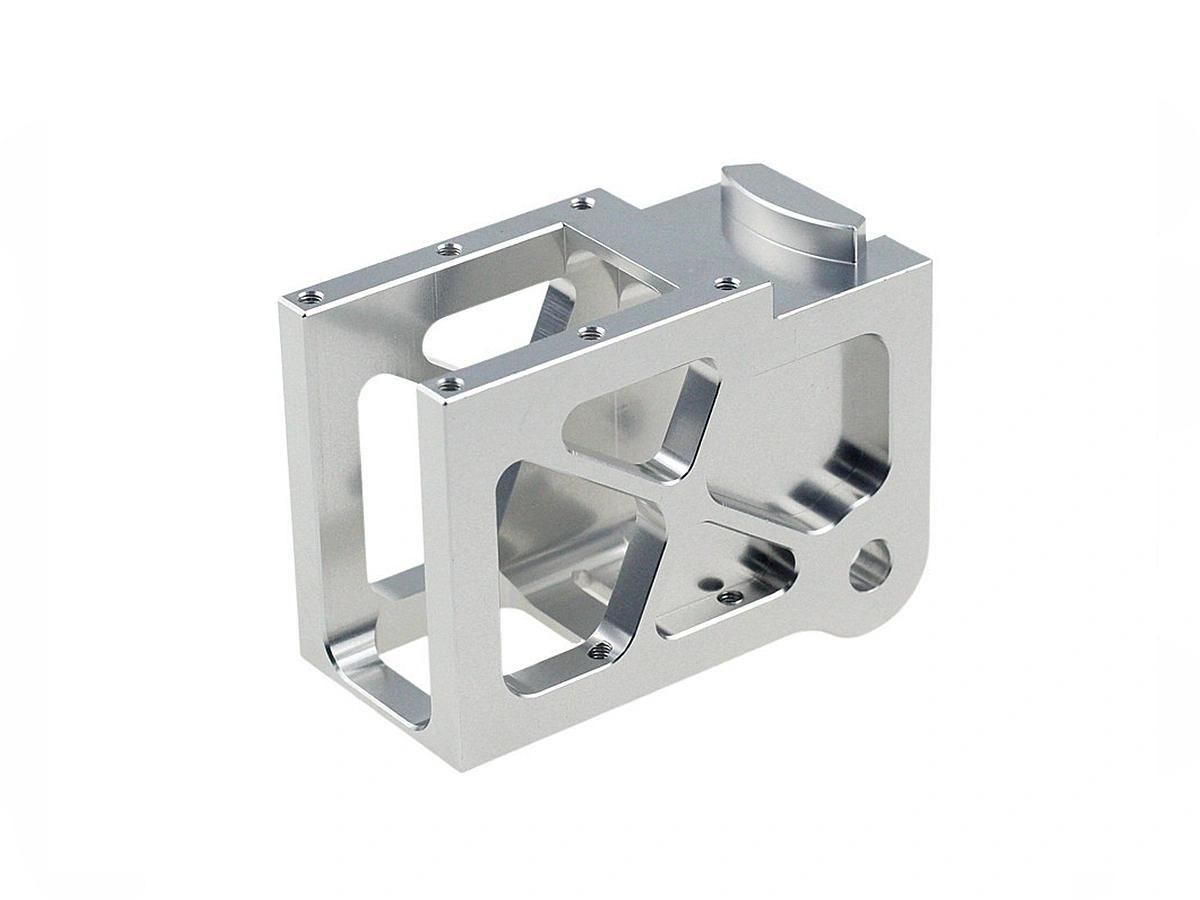
We can process various specifications of aluminum alloy parts such as 6061, 7075 and 5052, and fully meet the customized processing demands of different industries for aluminum structural parts, transmission accessories, shell parts and precision connecting parts.
From process optimization to quality full inspection, we strictly control every production link, take precision and durability as the core production standard, and provide stable and reliable overall processing solutions for global purchasers.
If you have demands for custom aluminum machining parts drawing customization, sample production and batch ordering, you can send us design drawings and detailed demand parameters at any time. Our professional technical team will formulate the most suitable processing scheme for you and provide accurate project quotation in the shortest time.