

INFORMATION
Welcome to our BLOG we re sharing konwledge in the fields that fascinate us most.
Stainless Steel CNC Machining: 2026 Complete Professional Guide

Stainless Steel CNC Machining: The Complete Professional Guide 2025
Materials, Grades, Processes, DFM, Tolerances, Surface Finishes, Cost and Industrial Solutions
Introduction to Stainless Steel CNC Machining
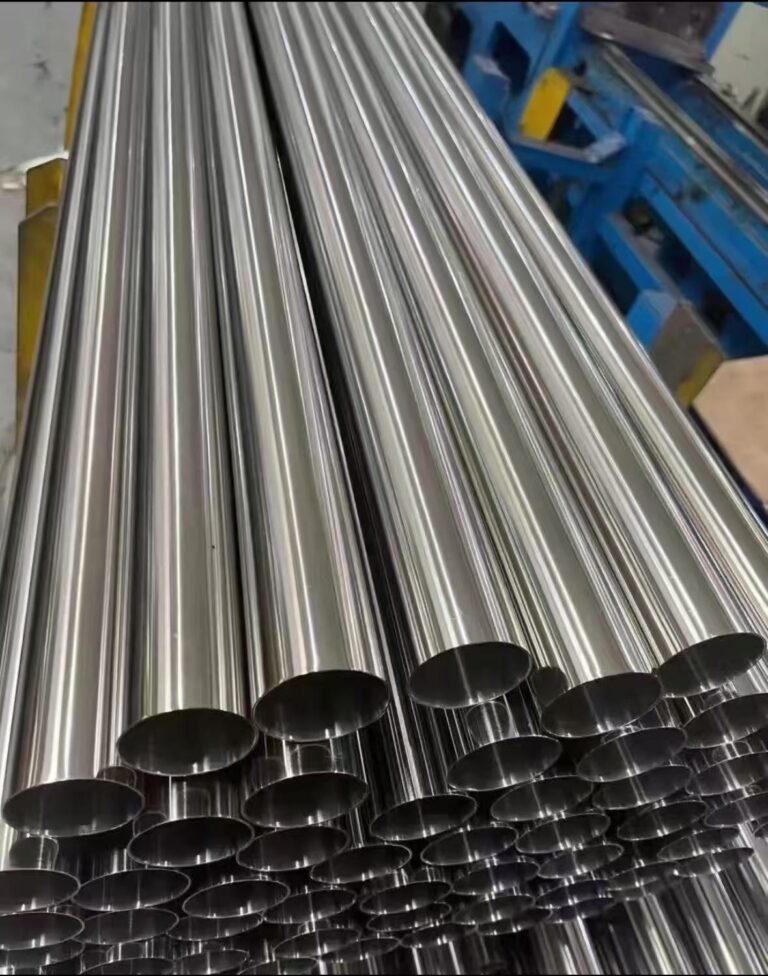
Stainless steel CNC machining is one of the most widely used precision manufacturing processes for high-performance parts. It uses computer-controlled machines to remove material from stainless steel blocks, bars, or tubes to create custom components with high precision, stability, and repeatability.
Stainless steel is widely chosen for its excellent corrosion resistance, high strength, hygiene, durability, and aesthetic appearance. It is widely applied in medical, food, marine, aerospace, automation, and many other industries that require reliable and long-lasting parts.
Why Stainless Steel Is Difficult to Machine
Stainless steel has special physical and mechanical properties that make machining more challenging than aluminum, copper, or ordinary steel.
- Work hardening occurs rapidly during cutting, increasing tool wear and machining resistance
- Poor thermal conductivity causes heat to concentrate at the cutting edge, damaging tools
- High toughness leads to long, tangled chips that affect machining stability
- Material tends to adhere to tools, causing built-up edge and poor surface quality
- High hardness increases cutting force and requires rigid equipment and professional tools
Common Stainless Steel Grades for CNC Machining
Choosing the right stainless steel grade directly affects part performance, machining difficulty, and cost.
| Grade | Key Features | Best Applications |
|---|---|---|
| 303 | Best machinability, free-cutting | Mass production, general parts, fast machining |
| 304 | General-purpose, good corrosion resistance | Food equipment, automation, housings, brackets |
| 316 | Strong chemical & seawater resistance | Marine, medical, chemical, offshore parts |
| 17-4 PH | High strength, heat treatable | Aerospace, hydraulic, high-stress components |
CNC Machining Processes for Stainless Steel Parts
CNC Turning
Used for shafts, sleeves, pins, fasteners, and cylindrical parts. Provides high concentricity and smooth surface finish.
CNC Milling
Used for complex structures, cavities, slots, flanges, and irregular shapes. Supports 3-axis, 4-axis, and 5-axis machining.
Drilling, Reaming & Tapping
Creates precision holes and internal/external threads for assembly connection.
Multi-Axis Machining
Reduces clamping times, improves accuracy, and produces complex parts in one operation.
DFM Guidelines for Stainless Steel CNC Parts
Reasonable DFM (Design for Manufacturability) reduces cost by 20%–60% and shortens lead time significantly.
- Use inner corner radius instead of sharp corners
- Maintain wall thickness ≥ 0.8 mm (minimum practical 0.5 mm)
- Limit thread length to 3× diameter for stable machining
- Avoid deep narrow cavities that increase difficulty and cost
- Reduce undercut features to avoid special tools
Tolerances & Surface Finishes
Tolerance and surface finish are key indicators of precision CNC machining quality.
- Standard tolerance: ±0.1 mm
- High precision tolerance: up to ±0.02 mm
- Standard surface roughness: Ra 3.2 – 6.3 μm
- Precision surface roughness: Ra 1.6 μm or better
Common Surface Treatments
- Passivation: improves corrosion resistance
- Electropolishing: smooth, bright, clean surface
- Bead blasting: matte uniform appearance
- Brushing: linear decorative finish
Cost Factors in Stainless Steel CNC Machining
- Material grade and raw material cost
- Machining time and tool consumption
- Part complexity and number of setups
- Tolerance and surface finish requirements
- Production quantity (larger batch = lower unit cost)
- Surface treatment and inspection requirements
Main Industry Applications
- Medical Devices: surgical tools, implants, diagnostic equipment
- Food & Beverage: valves, pumps, conveyors, hygienic parts
- Marine & Offshore: saltwater-resistant fittings, housings, shafts
- Aerospace: high-strength structural and hydraulic components
- Industrial Automation: sensors, brackets, end tools, fixtures
Key Professional Advices
Successful stainless steel CNC machining depends on material selection, optimized programming, high-quality tools, stable fixtures, effective coolant, and strict quality control. Professional suppliers can ensure high precision, stable quality, and cost-effective production.
Frequently Asked Questions (FAQ)
Q: What is stainless steel CNC machining?
A: It is a precision subtractive manufacturing process that uses CNC machines to produce custom stainless steel parts.
Q: Which stainless steel grade is easiest to machine?
A: 303 stainless steel has the best machinability.
Q: What is the difference between 304 and 316 stainless steel?
A: 316 has better corrosion resistance, especially against saltwater and chemicals.
Q: What tolerance can you achieve?
A: Standard ±0.1 mm, high precision up to ±0.02 mm.
Q: Do you provide surface treatment?
A: Yes, we offer passivation, electropolishing, bead blasting, and brushing.
Get Your Free DFM Analysis & Quote
Send us your 2D or 3D drawings, we will provide professional DFM feedback and accurate quotation within 24 hours.
Contact Us Now