


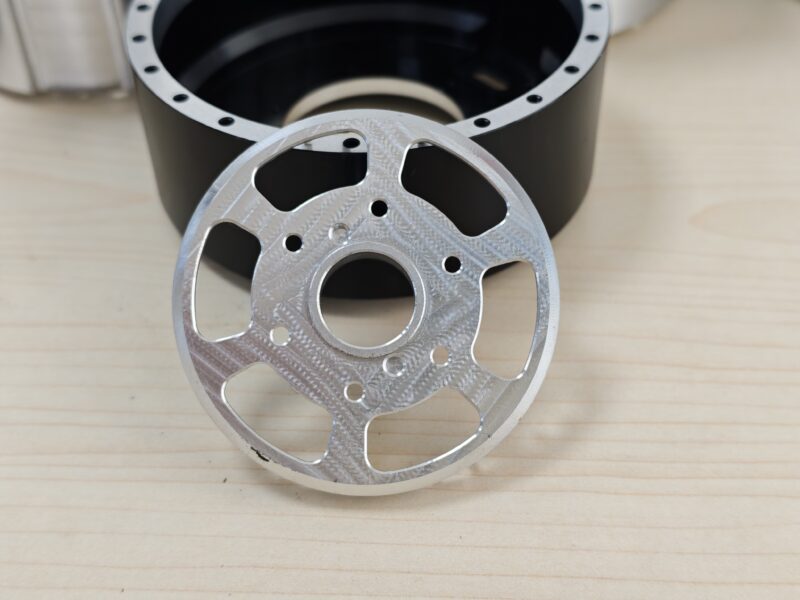
Aluminum Alloy Hollow Flange
Processing Cycle: 3-10 Days (depending on the complexity and quantity of the hollow structures).
Product Advantages: Advanced CNC machining technology perfectly realizes complex lightweight topological structures, ensuring high precision and consistency of the parts.
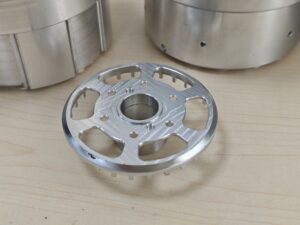
Material: Typically fabricated from 6061 or 7075 aluminum alloy. These materials are characterized by low density, high strength, and excellent machinability, making them ideal for lightweight components in aerospace, robotics, and high-end equipment.
Equipment: 3-axis or 5-axis CNC machining centers.
Mechanical Processing:
Face Milling: Precision milling of the top and bottom surfaces to ensure flatness and surface finish.
Profile Milling: Using end mills to machine the outer circular contour and complex internal hollow structures.
Drilling/Boring: Creating the central large hole and surrounding mounting holes.
Surface Treatment: Currently shows a raw mill finish. Subsequent processes typically include anodizing to enhance surface hardness and corrosion resistance, or bead blasting to eliminate tool marks and achieve a matte texture.
Product Advantages
Lightweight Design: Removing excess material through hollow structures significantly reduces inertia, making it suitable for high-speed moving parts.
High Rigidity-to-Weight Ratio: Optimized structural design maintains sufficient rigidity while reducing weight.
Excellent Heat Dissipation: The hollow structure increases surface area, facilitating better heat dissipation.
Use Scenarios
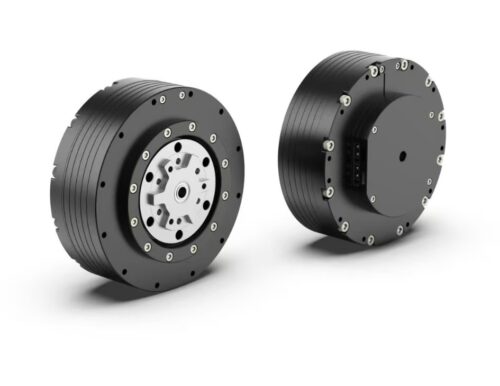
Robot Joints: Serving as a connection flange for robotic arm joints to reduce self-weight and improve the payload ratio.
Racing/Aerospace: Used for manufacturing wheels, brackets, and other weight-sensitive components.
Precision Rotary Tables: Acting as a base or connecting component for rotating platforms.
Automated Equipment: Used in high-speed indexing tables or end-effectors of robotic arms.


评价
目前还没有评价